
BMW Engine Damage – Diagnosis, Repair or Rebuild?
Does your BMW have engine damage, run poorly, make unusual noises or show the check engine light? Then it is important to identify the cause quickly. At Motorschmiede, we specialize in BMW engines and help identify and repair engine damage. We do not just look at what is broken, but above all at which solution makes the most technical and economic sense.
BMW engine damage does not automatically mean that the complete engine has to be replaced. In many cases, repair or rebuilding is still possible. That is exactly why a proper solution should always start with a focused diagnosis rather than replacing parts at random.
Tip: Don’t you want to wait until major damage occurs?
Learn more here about preventive BMW engine overhauls.

How to recognize BMW engine damage
Engine damage usually does not appear overnight. In most cases, there are warning signs beforehand. The earlier those signs are taken seriously, the better the chance of limiting the damage.
Common signs of BMW engine damage include:
- difficult starting or poor running when cold
- rattling or knocking noises from the engine
- rough idle
- loss of power
- smoke from the exhaust
- increased oil consumption
- check engine light on or flashing
- misfires or fault codes
- metal particles in the oil
- loss of compression
Common causes of BMW engine damage
The cause of engine damage can vary greatly depending on the engine type and the type of failure. Sometimes it starts with a stretched timing chain, sometimes with lubrication issues, bearing damage or high oil consumption that has been ignored for too long. In other cases, damage is caused by overheating, faulty valves, damaged pistons or cylinder wall issues.
Common causes include:
- stretched, slipped or broken timing chain
- bearing damage
- lubrication problems or oil pressure problems
- high oil consumption
- faulty valve stem seals or valves
- damage to pistons or cylinder walls
- overheating
- turbocharger damage with resulting engine damage
- internal wear at high mileage
At the first signs, you should act and have the engine checked to avoid expensive consequential damage.
What do we do in the event of BMW engine damage?
When dealing with engine damage, the first step is to determine how severe the damage really is. Not every defect means the entire engine is beyond repair. That is why we assess each engine individually to determine which components are damaged, how the damage occurred and which repair option is still technically reasonable.
Diagnosis as the first step
We inspect the engine specifically for fault codes, mechanical symptoms, oil condition and visible damage patterns. Depending on the problem, additional checks may be required, such as an endoscopic inspection, compression test or further dismantling. This allows us to determine whether it is an early-stage problem or a more serious internal failure.
Repair where it still makes sense
If the damage is limited or can be repaired locally, we first look at a targeted repair. This may involve the timing system, cylinder head, valves, bearings or other internal components.
Rebuild in the case of more serious internal damage
If the engine has more extensive internal wear or consequential damage, an engine rebuild may be the right solution. In that case, the engine is technically inspected, dismantled and rebuilt with repair or replacement of the damaged components.
Replacement engine only as a last option
If the engine block itself is beyond repair or if rebuilding is no longer economically sensible, a reconditioned replacement engine may become an alternative. But even then, the same principle applies: assess first, decide afterwards.
Repair or rebuild in the event of BMW engine damage?
That depends on the extent of the damage. Minor damage or damage identified at an early stage can often be handled very differently from an engine that has already been driven with severe internal wear. That is why it is usually not sensible to make a final judgment before diagnosis.
In many cases, repair is still possible when:
- the damage is identified early
- the engine block itself is still usable
- the damage is limited to specific components
- there is no major consequential damage inside the engine yet
A rebuild becomes more relevant when:
- several internal components show wear or damage
- there is loss of compression
- pistons, cylinders, bearings or valves are involved
- the engine needs to be rebuilt technically
When should you stop driving immediately?
Some warning signs indicate that continuing to drive may make the damage much worse in a very short time. Especially in the case of loud engine noises, heavy smoke, fault warnings together with rough running or suspected bearing damage, caution is essential.
You should not continue driving if you notice:
- an engine that clearly runs rough or on fewer cylinders
- loud rattling, knocking or grinding engine noise
- a flashing check engine light
- sudden heavy smoke
- significant loss of power
- oil pressure warning
- metal particles in the oil or oil filter
Contact us now!
Why choose Motorschmiede?
Anyone dealing with a BMW with engine damage is not looking for a general repair shop, but for a specialist who understands how BMW engines fail in practice and what can still be repaired. That is exactly what we focus on.
What you can expect from us:
- specialization in BMW engines
- targeted diagnosis instead of guesswork
- honest assessment of repair or rebuild options
- focus on restoring the engine rather than replacing it immediately
- experience with typical BMW engine problems
- clear communication about damage and possible solutions
Cost of repairing BMW engine damage
The cost depends heavily on the cause and the extent of the damage. Damage identified early is usually very different from an engine with severe internal consequential damage. That is why diagnosis is so important: only then can the necessary work be assessed properly.
The price depends in particular on:
- the BMW engine type
- the nature of the damage
- the extent of dismantling required
- the condition of the engine block
- the parts that need to be repaired or replaced
Have your BMW engine damage assessed
Do you suspect engine damage in your BMW or is the engine already showing clear symptoms such as rattling, smoke, oil consumption, loss of power or warning lights? Then do not wait too long. The sooner the cause is identified, the greater the chance of a targeted and technically sensible solution.
We are happy to help with diagnosis and an honest assessment of repair, engine rebuild or – if there is truly no other sensible option – a reconditioned replacement engine.
Find Motorschmiede GmbH here
About us
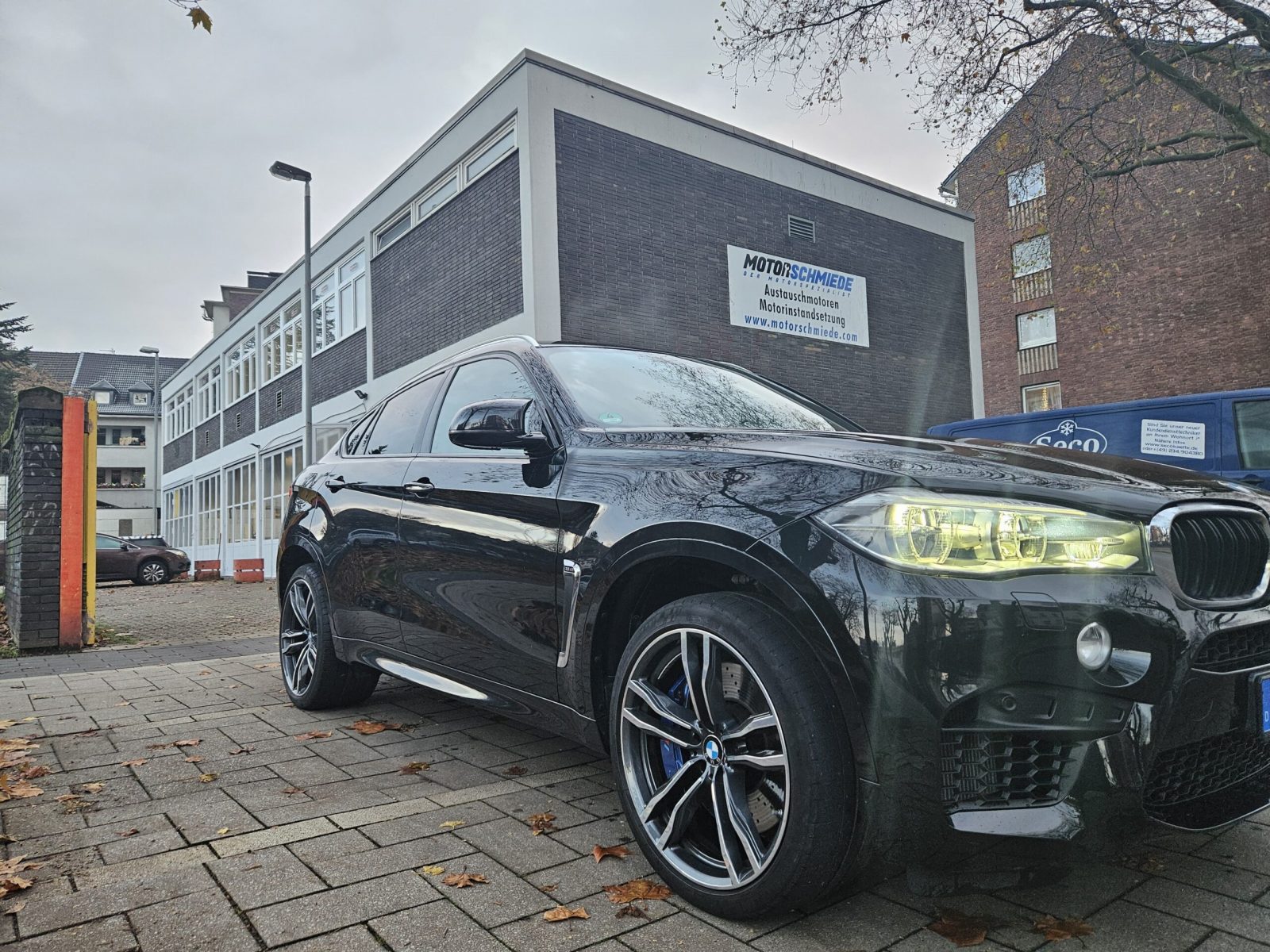
- Motorschmiede GmbH in Oberhausen has been in business for over 10 years
- Our team of more than 10 employees are specialists in BMW and MINI engines
- Engine repair, engine rebuilding, and the sale of replacement engines are our daily business
- We also carry out smaller repairs such as valve stem seal replacement, walnut blasting, etc.
FAQ – Frequently asked questions about BMW engine damage
What exactly does BMW engine damage mean?
BMW engine damage means that there is internal or external damage to the engine, for example to the bearings, valves, pistons, cylinders, timing components or other important parts.
Does a BMW with engine damage always need another engine?
No, not always. In many cases, repair or rebuilding is still possible. That depends on the cause, the extent of the damage and the condition of the engine block.
How can I recognize early BMW engine damage?
Common warning signs are rattling or knocking noises, oil consumption, smoke from the exhaust, loss of power, fault codes, rough engine running or metal particles in the oil.
Is it safe to keep driving with engine damage?
No. In many cases the damage becomes worse and more expensive very quickly. Especially with loud engine noises, smoke, oil pressure problems or a flashing check engine light, continuing to drive is risky.
What is the difference between repair and rebuild?
With a repair, a specific faulty part or damage pattern is addressed directly. With a rebuild, the engine is inspected more thoroughly, dismantled and technically rebuilt where necessary.
Contact
We help quickly: first the diagnosis, then the targeted repair
We have specialized in BMW and MINI engines for many years (as well as ALPINA, since these vehicles are equipped with BMW engines). Our approach is intentionally simple and effective: first the diagnosis, and only then the targeted repair. This helps us avoid unnecessarily replacing parts “at random” and allows us to address the real cause of the problem directly.
What we need from you (briefly):
- vehicle details (HSN/TSN or VIN)
- symptoms (only loss of power, or also jerking / noises / smoke?)
- check engine light: on or flashing?
- has anything already been done (e.g. fault codes cleared, parts replaced)?
Phone: 0208 80 80 88